
Ceiling Fan Installation & Replacement That Runs Quiet
A ceiling fan hangs over your head and spins for hours at a time. What holds it up matters more than the fan itself. Electrical code requires ceiling fans to mount on a box listed and marked for fan support, not the standard box that came with your old light fixture. Standard boxes are built to carry a few pounds of static weight. A fan adds motion, vibration, and 15 to 50 pounds of load.
Forefront Electric installs and replaces ceiling fans on properly rated supports, with the wiring, switching, and controls set up to match. That covers new fan locations where nothing exists yet, swaps where a light fixture used to be, and replacements of fans that have started to wobble, hum, or drop speeds.
The result is a fan that sits level, runs quiet, and stays where you put it.
Contact Us
CALL 541-999-5375
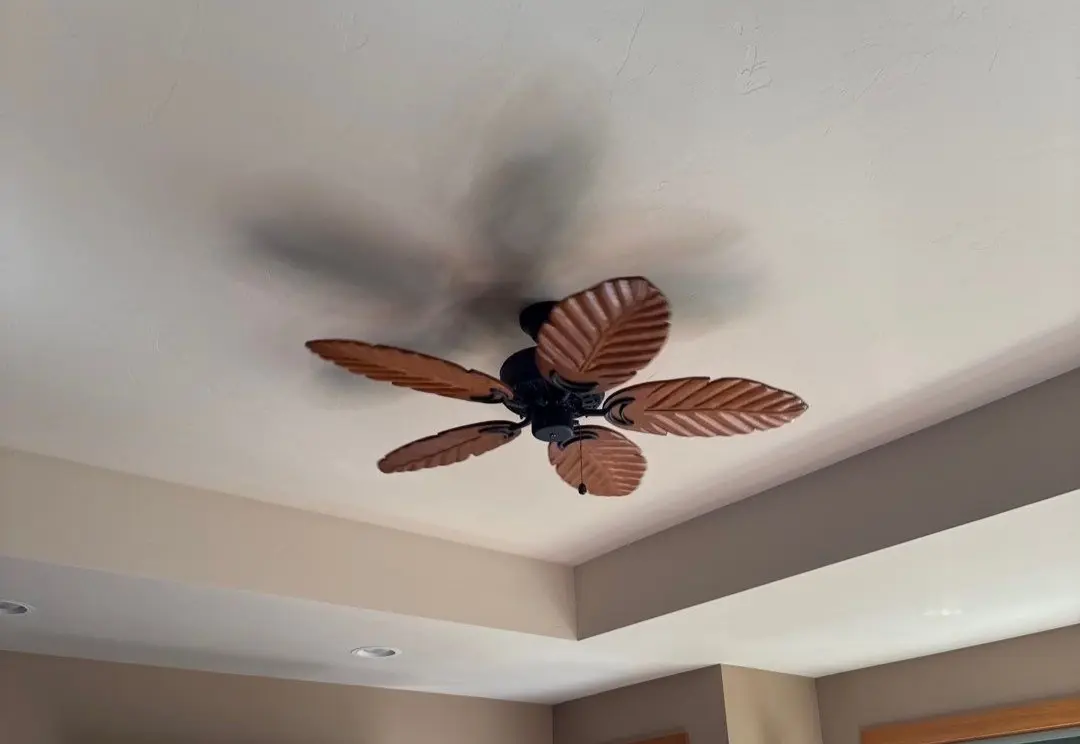
Ceiling Fan iNstalllation on Fan Rated Box and Brace
New fan locations start with support. NEC 314.27(C) requires a box listed and marked for ceiling fan support, and most rated boxes carry a 35 pound limit, with heavier-listed versions rated to 70 pounds. Where there is no attic access above the room, we install an expandable brace bar that spans the joists and anchors the box from inside the ceiling cavity.
Wiring follows the mount. A fan with a light kit that you want on separate switches needs three-conductor cable run to the switch box, which is a different pull than a single light fixture. We handle the box, the brace, the cable, and the switching so the fan works the way you expected when you bought it.
Ceiling Fan replacement for Wobbling, Noisy or Outdated Fans
A wobbling fan is usually a mounting problem, not a blade problem. Balancing kits treat the symptom. The cause is often a box that was never rated for a fan, screws that have backed out under years of vibration, or a downrod that is not seated correctly. We check the support before we touch the blades.
Replacements are also the moment to fix what the old fan could not do. Newer fans with DC motors run quieter and pull less power than older AC models. Energy Star certified fans move more air per watt. If your fan is controlled by a standard dimmer, that is worth correcting during the swap, since dimmers not made for fan motors cause humming and shorten motor life.
How to Match Fan Size, Mount, and Rating to the Room
Blade span should match the room. A bedroom or small office is usually right around a 42 to 48 inch span, while a large living room or open area needs 52 inches or more. CFM ratings tell you how much air the fan actually moves, which is the number worth comparing between models.
Mount type depends on your ceiling. Standard ceilings take a short downrod. High ceilings need a longer one to bring the blades into the airflow zone. Low ceilings call for a flush or hugger mount, since blades need at least 7 feet of clearance above the floor and roughly 18 inches from the nearest wall. Sloped ceilings need an adapter. Covered patios need a damp-rated fan, and anywhere exposed to direct water needs a wet-rated one.
Book a Licensed Electrician to Hang your fan
If you have a fan in the box and a spot picked out, give us a call. We will check what is above the ceiling, confirm the support and switching you need, and give you the scope before any work starts. Same goes if a fan you already own has started wobbling or making noise and you want it looked at rather than replaced.
Forefront Electric is licensed in Oregon under C1449 and CCB# 225612, and has been wiring homes since 2019. Call 541-406-6441 or fill out the form on this page.
Contact Us
CALL 541-999-5375
Frequently Asked Questions
Can I put a ceiling fan where a light fixture used to be?
Usually yes, but the box has to be swapped. NEC 314.27(C) requires ceiling fans to mount on a box listed and marked for fan support, and the box behind a standard light fixture almost never qualifies. Where there is attic access, we mount a rated box to blocking between the joists. Where there is not, an expandable brace bar goes in through the existing hole. The wiring is often already there. The support is the part that has to change.
Do I need an electrician to install a ceiling fan?
You do if the location is new, if the existing box is not fan-rated, or if you want the fan and light on separate switches, since that requires running three-conductor cable to the switch box. Forefront Electric handles the box, the brace, the wiring, and the controls, and holds Oregon electrical license C1449 and CCB# 225612. A straight swap onto an existing fan-rated box is a smaller job, but it is still worth confirming the support before trusting it.
Why does my ceiling fan wobble?
Most wobble traces back to the mount, not the blades. Common causes are a box that was never rated for a fan, mounting screws that have loosened under years of vibration, or a downrod that is not fully seated in the canopy. Blade balancing kits can mask a small imbalance, but they will not fix a support problem. A fan that has started wobbling after running fine for years is worth having inspected.
What size ceiling fan do I need for my room?
Match blade span to room size. Bedrooms and small offices generally take a 42 to 48 inch fan, while living rooms and open areas need 52 inches or more. Beyond span, compare CFM ratings, which measure how much air the fan actually moves. Ceiling height sets the mount: standard ceilings use a short downrod, high ceilings need a longer one, and ceilings under 8 feet need a flush or hugger mount to keep 7 feet of clearance above the floor.
What Your Neighbors Are Saying About Us

Areas We Serve

Albany
Cottage Grove
Creswell
Eugene
Junction City
Springfield