
Outlet Installation & Repair For Dead, Loose Or Overloaded Receptacles
An outlet is the part of your electrical system you touch every day, which is why problems tend to show up there first. A receptacle that has gone dead, feels warm, holds a plug loosely, or shows scorch marks is telling you something about the wiring behind it. Sometimes the fix is the device itself. Sometimes the outlet is only the symptom and the real issue sits in the circuit, the connection, or the panel.
Forefront Electric installs new outlets and repairs failing ones for homes and businesses. That covers adding receptacles where there are not enough, replacing two-prong outlets with grounded ones, putting in GFCI protection where code calls for it, and wiring dedicated circuits for large appliances, RVs, and shop equipment.
We find out why an outlet failed before replacing it, so the new device is not sitting on top of the same problem.
Contact Us
CALL 541-999-5375
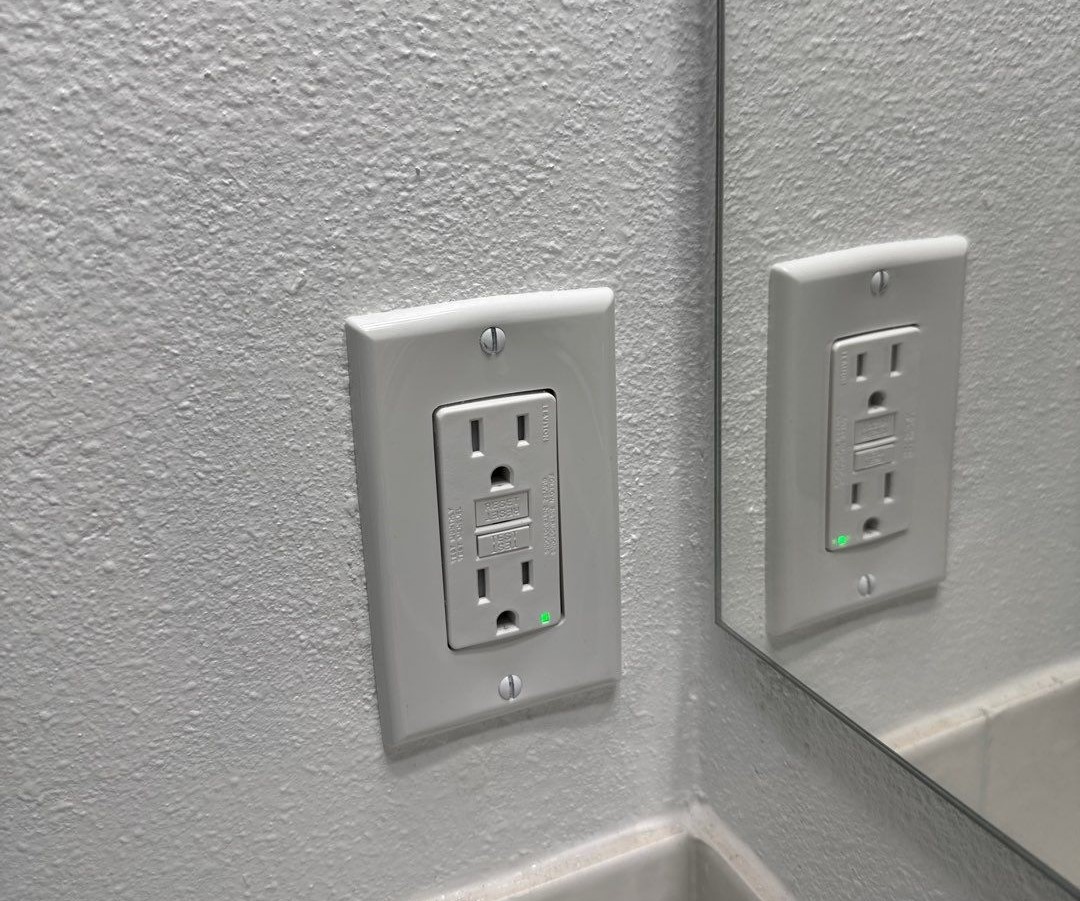
Outlet Installation for GFCI, USB, RV, and Appliance Circuits
New outlets start with the circuit that feeds them. Adding a receptacle to a circuit already near capacity causes nuisance trips, so we check the existing load before tying into it. Kitchens, bathrooms, garages, basements, and outdoor areas require GFCI protection under NEC 210.8, and most living areas call for AFCI protection as well.
The device then gets matched to the job. Standard 15-amp and 20-amp receptacles cover general use. USB outlets replace the block chargers. Large appliance and RV connections use higher-rated configurations like the NEMA 14-50, wired on their own dedicated circuit. Outdoor outlets need a weather-resistant device with an in-use cover.
Outlet TYPES WE INSTALL
GFCI OUTLETS
GFCI outlets cut power in a fraction of a second when current leaks to ground, and NEC 210.8 requires them in kitchens, bathrooms, garages, basements, laundry areas, and outdoors.
usb OUTLETS
USB outlets add built-in USB-A and USB-C charging ports to a standard receptacle, so phones and tablets charge without a block adapter taking up the plug.
NIGHTLIGHT OUTLETS
Nightlight outlets have a built-in LED that turns on automatically in the dark, lighting hallways, bathrooms, and kids' rooms without using up a plug.
LARGE APPLIANCE OUTLETS
Ranges, electric dryers, and other large appliances run on 240V receptacles like the NEMA 14-30 or 14-50, wired on a dedicated circuit sized to the appliance.
RV OUTLETS
RV outlets are typically a 30-amp TT-30 or a 50-amp NEMA 14-50 on a dedicated circuit, installed where your RV parks so it can run off house power.
Outlet repair for dead receptacles and burn marks
A dead outlet is not always a dead outlet. It can be a tripped GFCI further upstream, a loose backstab connection, an open neutral, or a failed device. We test before replacing, because swapping the receptacle without finding the cause just puts a new part on an old fault.
Some signs need attention sooner than others. Warmth, buzzing, discoloration around the slots, or a burning smell point to arcing or a loose connection heating up behind the wall. Plugs that fall out have worn contacts and should be replaced. Two-prong outlets have no ground path, and homes with aluminum branch wiring need devices rated CO/ALR.
How to Know Which Outlet Belongs Where
Location sets most of the requirement. GFCI protection is required anywhere water is close by, which covers kitchens, bathrooms, laundry areas, garages, basements, and anything outdoors. Tamper-resistant receptacles are required in homes under NEC 406.12, using spring-loaded shutters that block objects from entering the slots.
Load sets the rest. A 20-amp circuit uses a receptacle rated for it. Anything with a heavy, steady draw belongs on a dedicated circuit instead of sharing with the rest of the room. Window air conditioners, chest freezers, welders, and RV connections all fall in that group. Counting what runs at the same time tells you more than counting outlets.
Call a Licensed Electrician to Add or Fix an Outlet
If you have an outlet that stopped working, one that feels warm, or a room that never had enough of them, give us a call. We will test the circuit, find out what is actually happening behind the wall, and tell you what the fix or the addition involves before any work starts.
Forefront Electric is licensed in Oregon under C1449 and CCB# 225612, and answers the phone around the clock. Call 541-406-6441 or fill out the form on this page.
Contact Us
CALL 541-999-5375
Frequently Asked Questions
Why did my outlet stop working?
The most common cause is a tripped GFCI outlet somewhere else on the same circuit, often in a bathroom, garage, or outdoors, which cuts power to every outlet downstream of it. Other causes include a tripped breaker, a loose backstab connection, an open neutral, or a failed receptacle. If resetting the GFCI and the breaker does not bring it back, the problem is behind the wall. We test the circuit to find the actual fault before replacing anything.
Can I replace a two-prong outlet with a three-prong outlet?
Not by swapping the device alone. A three-prong outlet needs a ground wire behind it, and most two-prong outlets were installed without one. NEC 406.4(D) allows two fixes: run a new equipment ground to the box, or install a GFCI outlet labeled "No Equipment Ground," which adds shock protection without a ground path. Installing a three-prong outlet with no ground gives the appearance of a grounded outlet when it is not.
Can you install an outlet for an RV, dryer, or range?
Yes. RVs typically use a 30-amp TT-30 or a 50-amp NEMA 14-50 receptacle, while dryers and ranges run on 240V outlets like the NEMA 14-30 or 14-50. Each needs its own dedicated circuit, sized to the equipment, with wire gauge matched to the breaker. We check your panel for capacity and open breaker spaces first, since a full panel changes the scope of the job.
When should I hire an electrician to install a new outlet?
Any time the outlet goes in a new location, needs a new circuit, or has to meet current GFCI and AFCI requirements. A new outlet is not just a device on the wall. It ties into a circuit that may already be close to capacity, and adding load to that circuit is what causes breakers to trip. We check the existing load, the wire gauge, and the protection required before adding anything. Forefront Electric holds Oregon electrical license C1449 and CCB# 225612, and handles the circuit, the device, and the protection in one visit.
What Your Neighbors Are Saying About Us
Areas We Serve

Albany
Cottage Grove
Creswell
Eugene
Junction City
Springfield